シリコンイノベーションが次なる産業革命を牽引する:初心者向けロードマップ
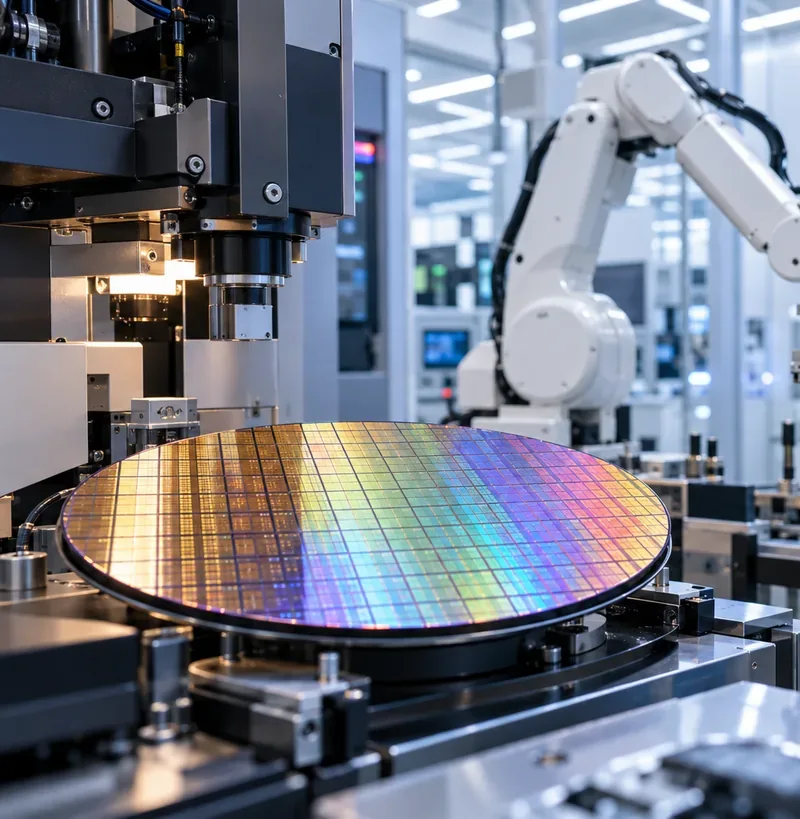
チップレット、高度なパッケージング、AIアクセラレーター、炭化ケイ素がどのように業界を変革しているのか、そして誇大広告に惑わされずにこれらの技術を評価する方法を学びましょう。
Humanoid robots can look remarkably capable in a short demonstration and still struggle when the lighting changes, an object is moved a few inches, a drawer sticks, or a task takes longer than the sequence used during training. That gap between a polished demo and dependable real-world work is the central problem next-generation humanoid robotics is trying to solve.
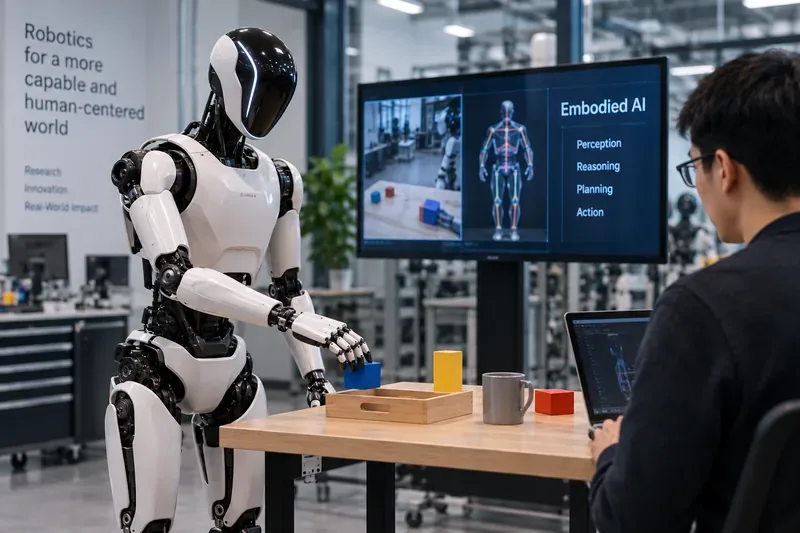
The shift now underway is from robots that mainly replay programmed motions toward robots that can perceive, reason, plan, and act through a physical body. This approach is commonly called embodied AI. In practical terms, the robot is not only running an AI model; its intelligence is tied to cameras, force sensors, joint positions, hands, legs, and the changing environment around it.
As of September 2026, several major robotics programs are pushing this direction. Google DeepMind introduced Gemini Robotics 2 in July 2026 with whole-body control and embodied reasoning; NVIDIA's GR00T 1.7 provides an open vision-language-action foundation model and end-to-end training workflow; Figure says Helix 02 extends its learned control from the upper body to full-body loco-manipulation; and Boston Dynamics is combining learned behaviors, reinforcement learning, and foundation-model research with its production Atlas platform. These developments are important, but they should be read as evidence of rapid progress—not proof that general-purpose humanoids are ready for every workplace or home.
Conventional industrial robots are extremely effective when the world is controlled. A fixed arm can repeat the same weld, placement, or assembly motion thousands of times because the object location, tooling, safety enclosure, and task sequence have been engineered around the robot.
Humanoid robots target a harder operating environment: spaces built for people. Shelves, doors, bins, tools, stairs, workstations, and parts may vary. The robot may need to walk, reach, balance, manipulate, recover from a bad grasp, and understand a spoken instruction without a technician rewriting a motion program every time something changes.
That creates four connected problems:
Embodied AI is changing humanoid development because it attacks these problems as a connected learning system rather than treating perception, planning, and motion as isolated scripts.
The easiest conceptual improvement is also the most fundamental: the robot must continuously observe what happened after it acted. A scripted machine can execute “move hand to coordinates X, Y, Z.” An embodied system instead tries to answer a richer loop: “Where is the object now? Did I grasp it? Did it move? What should I do next?”
Modern vision-language-action models, usually shortened to VLAs, connect visual input and natural-language instructions to robot actions. Google DeepMind describes Gemini Robotics 2 as a VLA that converts vision and language into motor control. NVIDIA describes GR00T 1.7 as a cross-embodiment VLA that accepts multimodal inputs such as language, images, and robot state and produces actions.
This matters because the same model can potentially reuse broad concepts across many tasks. “Pick up the blue box and place it in the tray” no longer has to mean a hard-coded trajectory tied to one exact table layout.
For current technical details, see Google DeepMind's July 2026 Gemini Robotics 2 release and NVIDIA's July 2026 GR00T 1.7 development guide.
The next step is reducing how much behavior must be learned from scratch. A robot foundation model aims to encode reusable priors about objects, language, motion, and manipulation before a developer specializes it for a particular humanoid or workflow.
NVIDIA says GR00T 1.7 was pretrained on roughly 32,000 hours of real demonstration and egocentric human data plus about 8,000 hours of simulated rollouts and demonstrations. Developers can then post-train the base model for a specific embodiment and task rather than beginning with an empty policy.
The expected quality gain is not simply “the robot knows more.” The more useful outcome is generalization: a policy should continue working when object position, viewpoint, background, or task phrasing changes within reasonable bounds.
A good sign that this approach is helping is when a team can add a new object, scene layout, or instruction with less task-specific retraining than before. A warning sign is when every new variation still requires a separate policy, carefully staged environment, or manual recovery routine.
Physical robots are costly training devices. Motors heat up, hands wear, batteries run down, objects break, and a fall can stop development for hours or days. Simulation addresses this by letting policies practice many variations in parallel before testing on hardware.
Boston Dynamics describes training Atlas behaviors with reinforcement learning in simulation, then moving to real hardware and iterating from real-world results. NVIDIA's GR00T workflow similarly includes simulation setup, teleoperation data collection, policy training, evaluation, and deployment.
The critical phrase is sim-to-real: transferring what a model learned in simulation to a physical robot. Simulation is valuable, but it is not reality. Friction, contact, sensor noise, cable behavior, material compliance, and human unpredictability are difficult to model perfectly.
Teams should therefore treat simulation as a force multiplier, not a replacement for hardware validation. A policy that looks perfect in simulation but collapses under small real-world variations has not solved the deployment problem.
Humanoids become truly different from stationary robot arms when locomotion and manipulation are solved together. A person opening a heavy door naturally shifts weight, changes stance, rotates the torso, and adjusts grip. Humanoid robots must coordinate similar dependencies across many joints while remaining stable.
Figure announced Helix 02 in January 2026, saying its system links vision, touch, and proprioception to full-body actuation in a unified visuomotor network. The company demonstrated an autonomous dishwasher task that combined walking, balance, and manipulation over several minutes. This is a company-reported demonstration rather than an independent benchmark, but it illustrates the direction clearly: full-body autonomy is replacing the older split between “navigation first” and “arm task second.”
Google DeepMind's Gemini Robotics 2 release similarly emphasizes whole-body humanoid control, including coordinated movement from feet to fingertips. The broader engineering goal is not to make every humanoid move like a person. It is to let the robot choose stable, efficient body motions that achieve the task safely.
A VLA can handle local sensor-to-action behavior, but long tasks need higher-level reasoning. Consider “clear this workbench, put tools in their labeled drawers, throw away packaging, and report anything damaged.” The robot must identify subtasks, track which ones are complete, recognize failure, and change the plan when the environment does not match expectations.
Google DeepMindは、空間認識、タスク計画、ツールオーケストレーション、成功検出を目的とした身体化推論モデルであるGemini Robotics ER 2において、この役割を分離している。同社は、高レベルの推論モデルが低レベルのVLAに運動実行を委ねる階層構造を説明している。
この階層構造設計が重要なのは、高周波の運動制御と、ゆっくりとした慎重なタスク計画では、それぞれ異なる要件があるからだ。人型ロボットの手は迅速な制御更新を必要とするかもしれないが、計画担当者は、何らかの重要な出来事が発生した後にのみ、次のサブタスクを再検討すればよいかもしれない。
生産チームにとって、品質テストとは、システムがよくあるミスから回復できるかどうかです。前のステップがすべて成功した場合にのみ8ステップを実行できるロボットは、依然として脆弱です。より優れたシステムは、「部品が滑り落ちた」ことを検知し、それを再取得して、タスク全体をリセットすることなく続行できます。
クラウド推論は大規模なモデルと高度な計算能力を提供できますが、物理的なロボットは反応する前にネットワークの往復通信を常に待つことはできません。バランス、衝突回避、把持修正、および多くの制御ループには、低遅延で予測可能な応答速度が求められます。
そのため、デバイス上のロボットモデルとエッジアクセラレータが重要となる。Google DeepMindのGemini Robotics On-Deviceは、汎用的な操作インテリジェンスをローカルで実行することに重点を置いている一方、NVIDIAのヒューマノイドスタックは、Jetson Thorなどのエッジコンピューティングを介した展開をサポートしている。
高性能ヒューマノイドのアーキテクチャは、純粋なローカル型や純粋なクラウド型ではなく、ハイブリッド型になる可能性が高い。つまり、ロボットの近くで高速な知覚と制御を行い、レイテンシと接続性が許す限り、より高度な計画、フリート分析、モデル更新などは、より高性能なインフラストラクチャ上で実行される。
身体化されたAIの商業的メリットは、スキルを多くのロボット間で再利用できる場合にさらに大きくなります。従来の自動化では、多くの場合、同じプログラムを同一のセルにコピーすることで規模を拡大します。学習されたヒューマノイドの行動は、改良されたポリシーを配布し、フリートデータを使用して新たな障害事例を発見することで、潜在的に規模を拡大できます。
ボストン・ダイナミクスは、学習済みのAtlasの動作を複数のロボット群に再展開できると述べており、部品のシーケンス処理やマテリアルハンドリングといった産業用途向けにAtlasを開発している。同社の2026年製品開発計画には、Google DeepMindとのGemini Robotics基盤モデルに関する共同研究も含まれている。ボストン・ダイナミクスのAtlas進化概要とGoogle DeepMindとの提携発表を参照のこと。
艦隊学習は新たな要件、すなわち評価規律を生み出す。あるタスクを改善する一方で他のタスクに不具合を生じさせるようなポリシー更新は、回帰テストなしに広く展開すべきではない。
| 従来のアプローチ | 具現化されたAIの方向性 | 期待される結果 |
|---|---|---|
| スクリプトと座標を修正しました | 閉ループ視覚および固有受容感覚制御 | 物体が動いたり、掴み方がうまくいかなかったりした場合の復旧 |
| タスクごとに1つのポリシー | 基礎モデルと研修後 | 関連タスクへのより迅速な適応 |
| 歩行と操作を分離する | 全身学習制御 | 長時間の作業における安定した移動操作 |
| 小型物理データセット | 実データとシミュレーションおよび遠隔操作 | エッジケースのカバー範囲の拡大 |
| ローカルタスクスクリプト | 階層的推論とVLA実行 | 自己修正機能を備えたより長いシーケンス |
| 単一ロボットのチューニング | クロスエンボディメントとフリートラーニング | プラットフォームやデプロイメントを問わず再利用可能なスキル |
進歩は確かに存在するが、いくつかの限界は依然として過小評価されがちだ。
ロボット工学の評価で高得点を獲得したモデルでも、安全性が極めて重要な用途には不向きな場合があります。Google DeepMindのGemini Robotics ER 2モデルの説明カードには、生産現場、商業施設、公共の場での使用には慎重を期すよう明記されており、誤作動によって負傷、死亡、または物的損害を引き起こす可能性が予見されるような安全性が極めて重要な用途には、このロボットモデルを使用すべきではないとされています。
箱をピッキングする作業は、柔軟なケーブル、濡れた物体、変形しやすい包装材、きつく締まった留め具、あるいはごちゃごちゃした工具セットなどを扱う作業よりもはるかに簡単です。したがって、優れた実演は、視覚的な複雑さだけでなく、作業の多様性と再現性によって評価されるべきです。
個々のアクションの信頼性は高くても完璧に近いものではない場合、数十または数百もの依存アクションを含むタスクは頻繁に失敗する可能性があります。そのため、アクションの正確性そのものと同様に、成功の検出、回復、例外処理も重要になります。
より優れたモデルであっても、手の力が弱い、感覚機能が不十分、アクチュエーターが過熱する、バッテリー寿命が限られている、機械的なバックラッシュがある、あるいはメンテナンスが難しいといった問題を、永久に補うことはできません。ヒューマノイドロボットの有用性は、ソフトウェアとハードウェアが共に向上していくことにかかっています。
具現化されたAIを評価する最良の方法は、デモの品質だけにとどまらず、ロボットが変化によってより有用になるかどうかを問うことです。実践的な自己チェックには、次のような質問が含まれます。
綿密に計画されたデモンストレーションでのみ進歩が見られ、これらの指標では進歩が見られない場合は、チームはアプローチを変更すべきである。多くの場合、タスクを絞り込む、より質の高い故障データを収集する、シミュレーションの適用範囲を拡大する、低レベルの制御を強化する、または明確な安全層と復旧層を追加するなどの方法が考えられる。
身体化されたAIは、ロボットがスキルを習得し再利用する方法を変えることで、ヒューマノイドロボット工学に革命をもたらしています。重要な転換点は、あらゆる動作をプログラムすることから、知覚、言語、身体状態、推論、行動を連続的なループで結びつけることができるトレーニングシステムへと移行することです。
2026年における最も有力な証拠は、ヒューマノイドが普遍的に汎用的なものになったということではない。むしろ、これまで別々に存在していた複数の技術――マルチモーダル基盤モデル、VLAポリシー、強化学習、シミュレーション、器用なハードウェア、デバイス上での推論、そして艦隊展開――が、一貫性のあるロボットスタックへと収束しつつあるということである。
こうした技術融合によって、ヒューマノイドロボットはより適応性が高く、学習も容易になるが、信頼性の高い自律性を実現するには、ロボットが実際に稼働する環境での綿密な評価が依然として必要となる。次世代のロボットは、驚くべきデモンストレーションを披露できるかどうかよりも、有用な作業を安全に繰り返し実行できるかどうか、日常的なミスから回復できるかどうか、そして絶え間ない手動による再プログラミングなしに性能を向上させられるかどうかで評価されるようになるだろう。
チップレット、高度なパッケージング、AIアクセラレーター、炭化ケイ素がどのように業界を変革しているのか、そして誇大広告に惑わされずにこれらの技術を評価する方法を学びましょう。
See how embodied AI, vision-language-action models, simulation, and whole-body control are making humanoid robots more adaptable—and where limits remain.
高密度な都市部の空域における、集中型航空交通管制、UTM/U-space、回廊型、およびハイブリッド型の交通管理について、安全性、拡張性、回復力、およびトレードオフを含めて比較検討する。
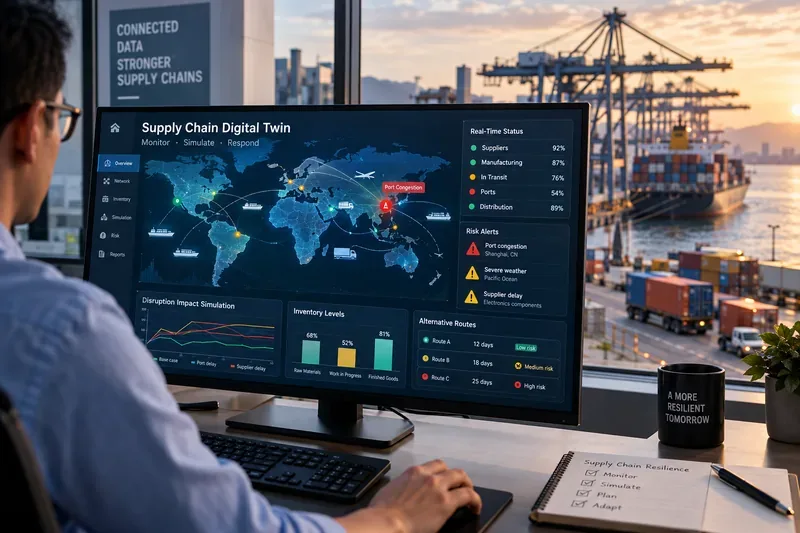
サプライチェーンのデジタルツインが、ライブデータ、シミュレーション、シナリオテストをどのように組み合わせることで、可視性、回復力、および混乱への対応力を向上させるのかを学びましょう。
航空貨物輸送を大規模かつ確実に行うために必要な、空域、地上拠点、エネルギー、通信、安全、そして地域インフラについて、実践的な視点から考察する。
巨大都市が、グリーンインフラ、都市林、湿地、屋上緑化、水辺緑地帯などを活用して、暑さや洪水のリスクを軽減する方法。
UTMが共有飛行意図、戦略的な衝突回避、適合性監視、戦術的な分離、そして慎重に境界設定されたAIをどのように組み合わせて、密集したドローン交通を管理しているかをご覧ください。
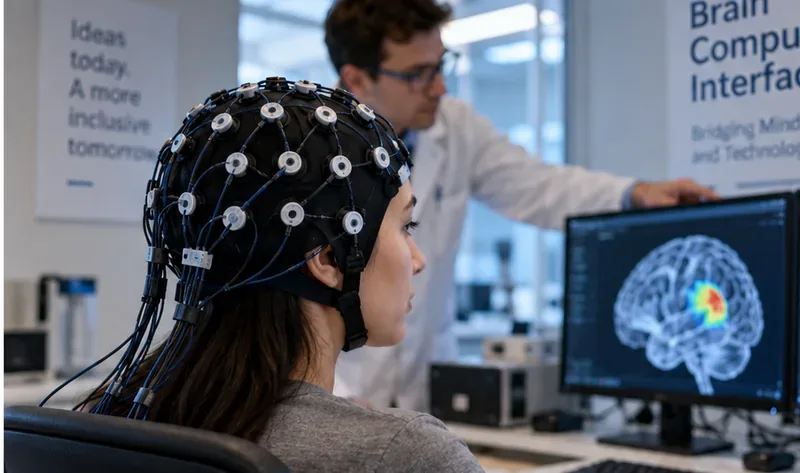
脳とコンピューターのインターフェースがどのようにコミュニケーションと制御を回復させるのか、現在の研究で実際に何ができるのか、そして今後直面する安全性と倫理上の問題について探究する。
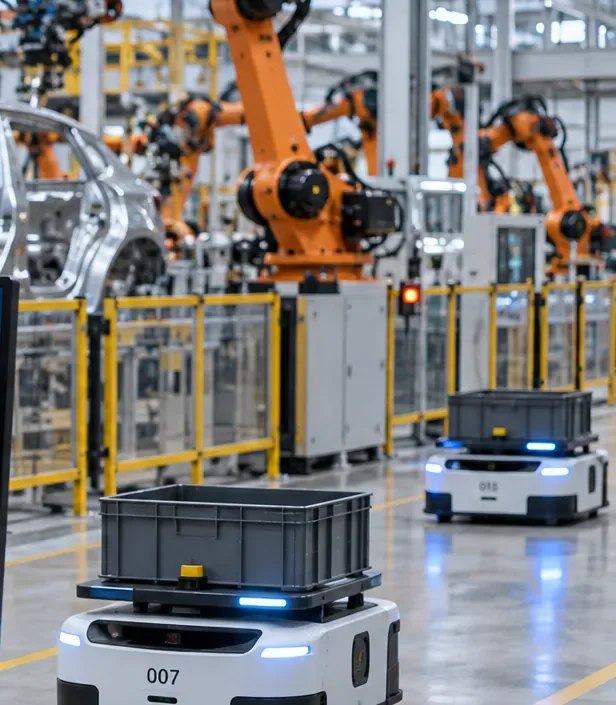
明確にラベル付けされた架空の工場例を通して、工場がロボット工学、AMR(自律移動ロボット)、AI、デジタルスレッド、安全性、サイバーセキュリティといった分野にわたる自律システムをどのように拡張していくかをご覧ください。
学士課程から博士課程まで、主要なBCI(脳コンピューターインターフェース)、神経工学、神経技術の学位プログラムを比較し、出願前に何を学ぶべきかを把握しましょう。